
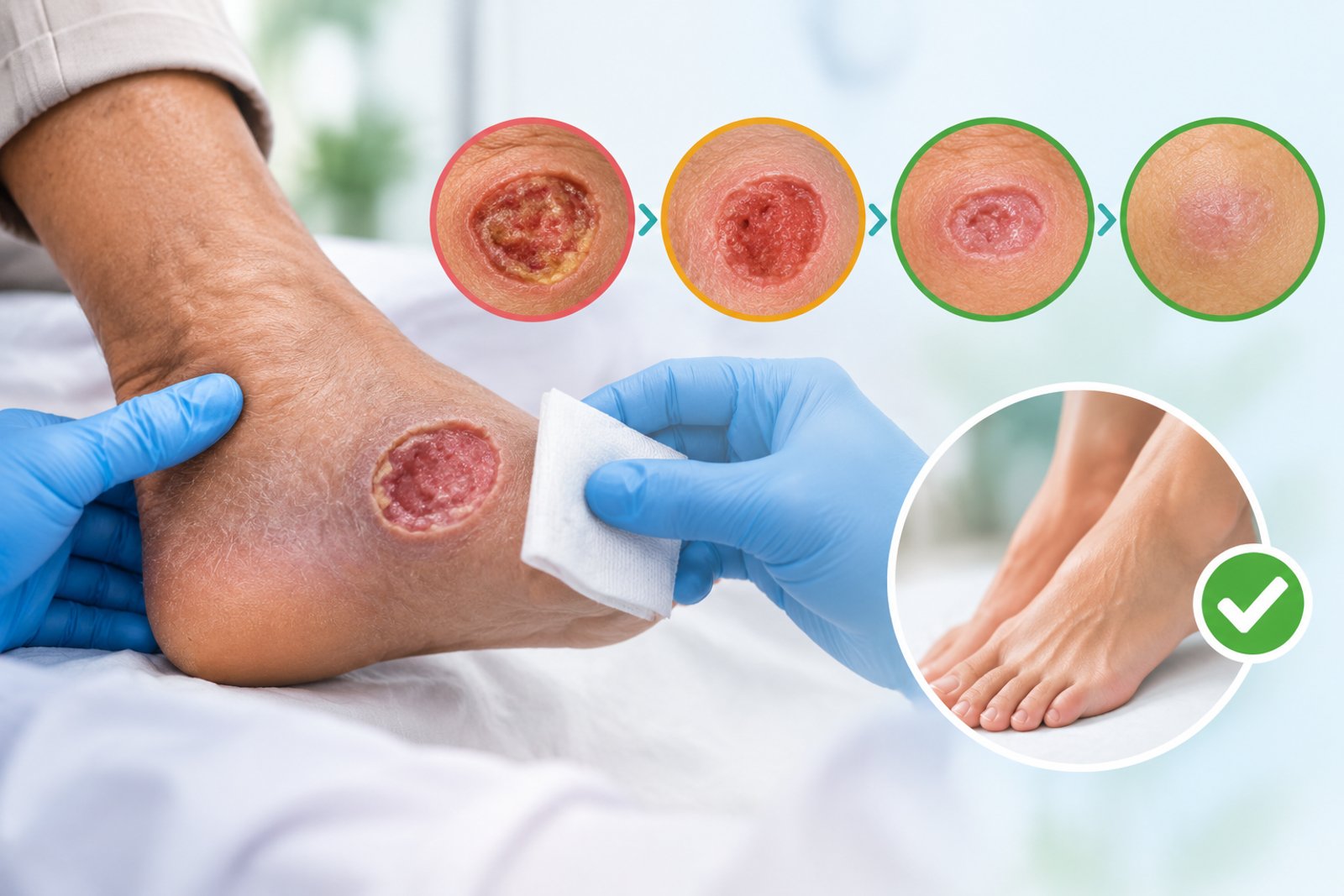
Diabetic wounds can be slow to heal and may lead to serious problems if not cared for properly. Because of this, it is important to know what a healthy healing diabetic wound looks like. Early signs of wound healing in diabetes can help you track progress and avoid complications. With the right care, including Ayurvedic wound care for diabetes, you can support your body’s natural healing process.
Understanding Diabetic Wounds
Diabetic wounds are injuries or sores that happen more often in people with diabetes. These wounds, especially on the feet, need special care. For example, high blood sugar can slow healing and increase the risk of infection. In addition, poor blood flow and nerve damage make it harder to notice or treat wounds early.
Common causes and risk factors include:
Because these wounds can get worse quickly, regular checks are important.
Ayurvedic Perspective on Wound Healing
Ayurveda, India’s traditional system of medicine, offers a unique approach to wound care. According to Ayurveda, wounds are called “Vrana.” Healing focuses on balancing the body’s natural energies, or doshas. In this way, Ayurveda aims to support both the body and mind during recovery.
Ayurvedic wound care for diabetes often includes:
While Ayurveda can support healing, it is important to combine these methods with modern medical advice.
Signs of a Healthy Healing Diabetic Wound
It is helpful to know what a healthy healing diabetic wound looks like. This can help you spot progress and avoid problems. Here are some signs of wound healing in diabetes:
However, some changes are not normal. For instance, increased redness, foul smell, or thick yellow discharge may signal infection. If you notice these, seek medical help right away.
Monitoring Progress: What to Watch For
Daily checks help you spot changes early. In fact, regular monitoring is key to safe healing. Here are some tips for tracking diabetic wound healing stages at home:
If you see signs of infection or slow healing, contact your healthcare provider. Early action can prevent serious problems.
Lifestyle and Preventive Tips
Supporting wound healing goes beyond just wound care. Ayurveda suggests a balanced lifestyle for better results. For example, eating a healthy diet with fresh, whole foods can help your body heal. In addition, gentle exercise like walking or yoga may improve blood flow.
Other helpful tips include:
Preventive steps can lower your risk of new wounds or slow healing.
When to Consult a Healthcare Professional
Some warning signs mean you should see a doctor right away. For instance, watch for:
Regular check-ups are important for anyone with diabetes. This helps catch problems early and keeps wounds on track to heal.
For personalised guidance and expert care, Consult at Acubiosys Private Limited.