
Introduction
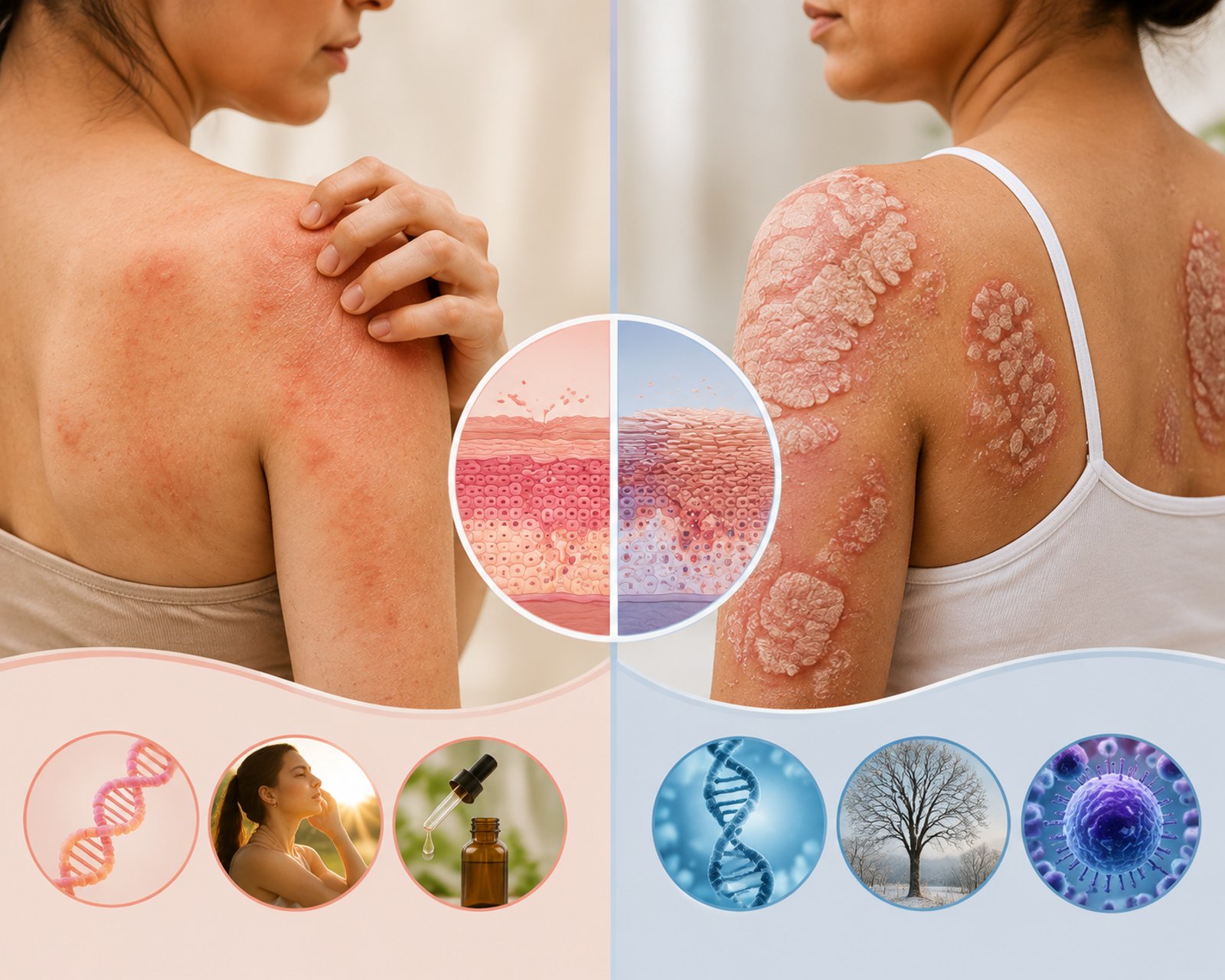
Atopic dermatitis and psoriasis are two common skin conditions. Both cause red, itchy, and sometimes scaly patches. However, they are not the same. The difference between atopic dermatitis and psoriasis is important for proper care. Many people now seek Ayurvedic treatment for atopic dermatitis and Ayurvedic remedies for psoriasis. Ayurveda offers natural ways to manage these skin problems. In this blog, we will explain the differences, triggers, and Ayurvedic treatments for both conditions.
What is Atopic Dermatitis?
Atopic dermatitis, often called eczema, is a long-lasting skin problem. It usually starts in childhood but can affect adults too. The skin becomes dry, itchy, and inflamed. Sometimes, small bumps or blisters appear. Scratching can make the skin thick and rough. Atopic dermatitis often runs in families. It is not contagious, so you cannot catch it from someone else. According to the World Health Organization (WHO), atopic dermatitis affects millions worldwide.
What is Psoriasis?
Psoriasis is another long-term skin condition. It causes thick, red patches with silvery scales. These patches can appear anywhere, but often show up on the elbows, knees, scalp, and lower back. Psoriasis can be itchy or even painful. Unlike atopic dermatitis, psoriasis is linked to the immune system. It is also not contagious. The Centers for Disease Control and Prevention (CDC) notes that psoriasis affects about 2-3% of people worldwide.
Key Differences Between Atopic Dermatitis and Psoriasis
Common Triggers
Both conditions can flare up due to certain triggers. Knowing these can help prevent outbreaks.
Ayurvedic Perspective on Atopic Dermatitis and Psoriasis
Ayurveda is an ancient Indian system of medicine. It believes that skin diseases happen due to imbalances in the body’s energies, called doshas. Atopic dermatitis is often linked to an imbalance in the Vata and Kapha doshas. Psoriasis is usually related to an imbalance in the Vata and Pitta doshas. Ayurveda focuses on treating the root cause, not just the symptoms. It uses herbs, diet, and lifestyle changes to restore balance. Many Ayurvedic clinics in India offer personalized care for these skin conditions.
Ayurvedic Treatments and Remedies
Ayurvedic treatment for atopic dermatitis and Ayurvedic remedies for psoriasis include natural methods. These aim to soothe the skin and balance the doshas.
Always consult a qualified Ayurvedic doctor before starting any remedy.
Lifestyle and Prevention Tips
Simple lifestyle changes can help manage atopic dermatitis and psoriasis. These tips may prevent flare-ups and keep skin healthy.
When to Consult a Specialist
Sometimes, home care is not enough. If your skin condition does not improve, or if you notice signs of infection like pus, swelling, or fever, seek medical help. Also, if the itching or pain affects your daily life, it is best to see a doctor. For natural care, consult Acubiosys Private Limited for the right Ayurvedic treatment for atopic dermatitis or Ayurvedic remedies for psoriasis based on your needs.
For personalized advice on managing atopic dermatitis or psoriasis, consult at Acubiosys Private Limited now.