
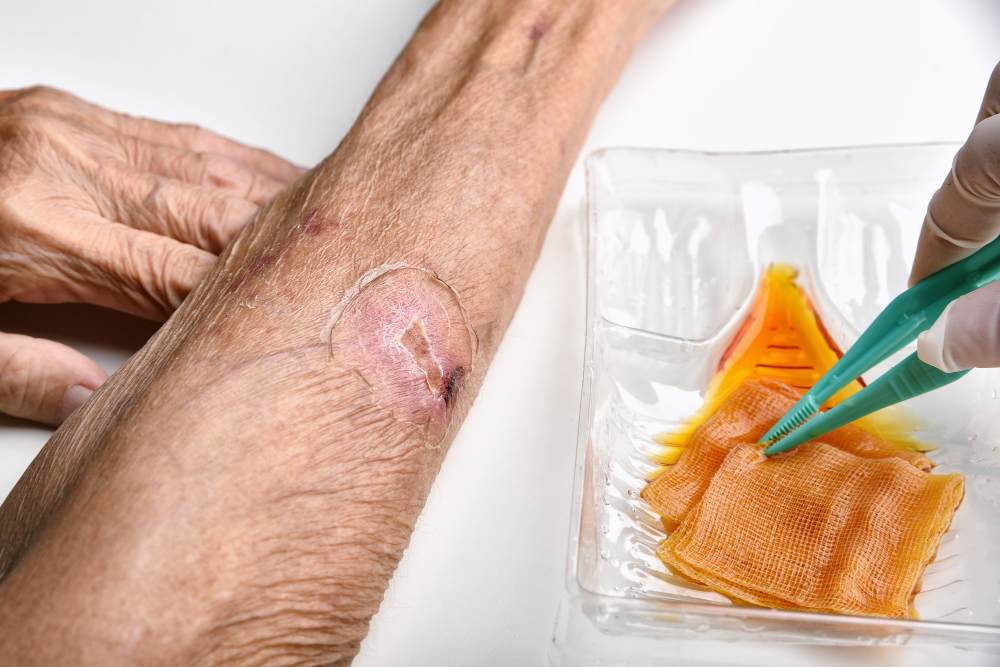
What Is a Diabetic Wound?
Many people with diabetes may develop wounds that heal slowly. These are called diabetic wounds. Often, they appear on the feet or legs. Because blood sugar levels stay high, the body takes longer to repair itself. As a result, even small cuts or blisters can turn into bigger problems. According to the World Health Organization (WHO), diabetic wounds need careful care to prevent infection and other issues.
Why the Surrounding Area Matters
Sometimes, people focus only on the wound itself. However, the area around a diabetic wound is just as important. For example, healthy skin nearby can help protect the wound from germs. On the other hand, if the skin around the wound is weak or damaged, problems can spread. In addition, changes in the surrounding tissue may signal infection or poor healing. Therefore, caring for the whole area helps support faster recovery and lowers the risk of complications.
Common Problems in the Area Around a Diabetic Wound
It is common to see changes in the skin around a diabetic wound. These changes can make healing harder. Some common problems include:
Sometimes, these signs mean an infection is starting. In other cases, they show that blood flow is poor. According to the Centers for Disease Control and Prevention (CDC), ignoring these signs can lead to serious complications, such as ulcers or deeper infections.
Ayurvedic Insights on Wound Care
Ayurveda, an ancient system of medicine from India, offers gentle ways to care for wounds. In Ayurveda, the skin is seen as a mirror of inner health. Therefore, both the wound and the area around it need attention. Ayurvedic wound care for diabetics often includes:
For example, turmeric and neem are common Ayurvedic herbs used for their healing and germ-fighting properties. In addition, gentle massage with medicated oils can help improve blood flow around the wound. Many Ayurvedic texts also stress the importance of a calm mind and healthy lifestyle for better healing.
How to Care for the Area Around a Diabetic Wound
Proper care of the skin around a diabetic wound can prevent new problems. Here are some steps you can follow:
Sometimes, your doctor may suggest special creams or dressings. If you use Ayurvedic remedies, make sure they are safe and approved by a healthcare provider. In addition, always watch for signs of infection, such as increased pain or pus.
Preventing Complications: Practical Tips
Taking steps to protect the area around a diabetic wound can help you avoid serious issues. Here are some practical tips for preventing diabetic wound complications:
Because caring for skin around diabetic ulcers is so important, regular check-ups can help catch problems early. In addition, following both modern and Ayurvedic advice can give you the best chance for healthy healing. Consult at Acubiosys Private Limited for effective treatment solutions.